“Marktplatz” – Bergstraße – Lange Straße Urban Regeneration
Anno: 2024
Posizione: Lage
Cliente: Stadt Lage
Fase: Competition
Superfice: 9.755 mq
The town of Lage owes its origin and development to brick production, supported by its location along the Bega River and the abundance of clay resources. From the 18th century onwards, widespread poverty led many inhabitants to work as itinerant brickmakers (Wanderziegler), establishing Lage as an important organizational center for this activity. The traditional winter market, the Mäckelmarkt, marked the moment when employment contracts for the following year were negotiated. This tradition has deeply shaped the town’s identity, which remains strongly tied to brick as a defining material, visible in historic buildings, paving, and public spaces. This cultural legacy continues to be an integral part of the urban image and of the community’s self-perception.
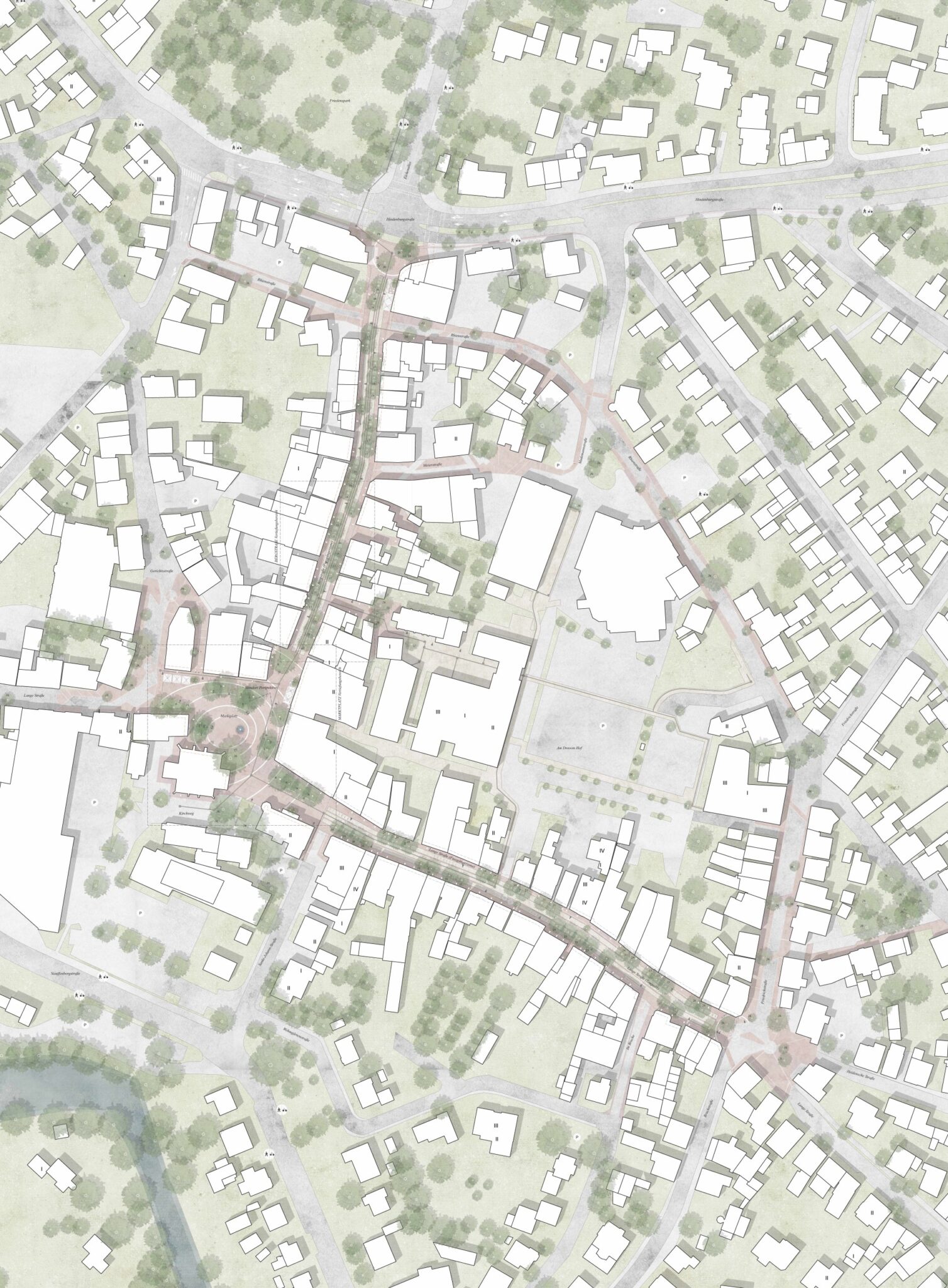
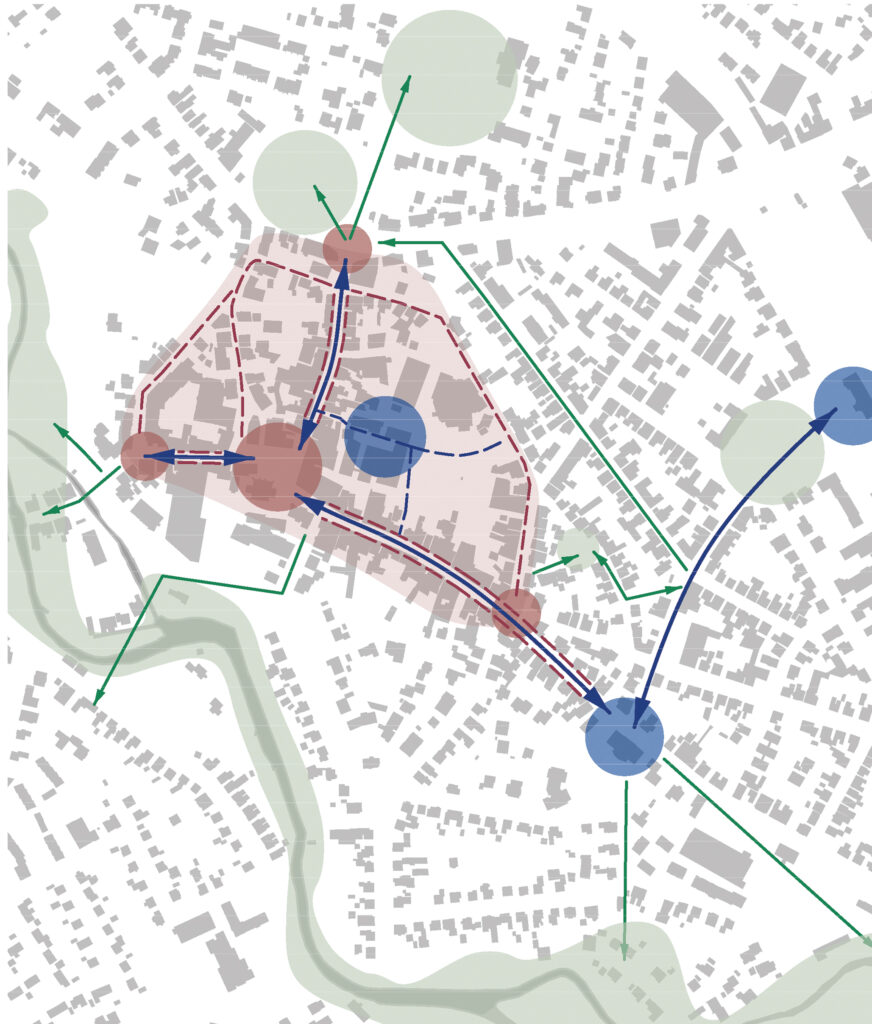
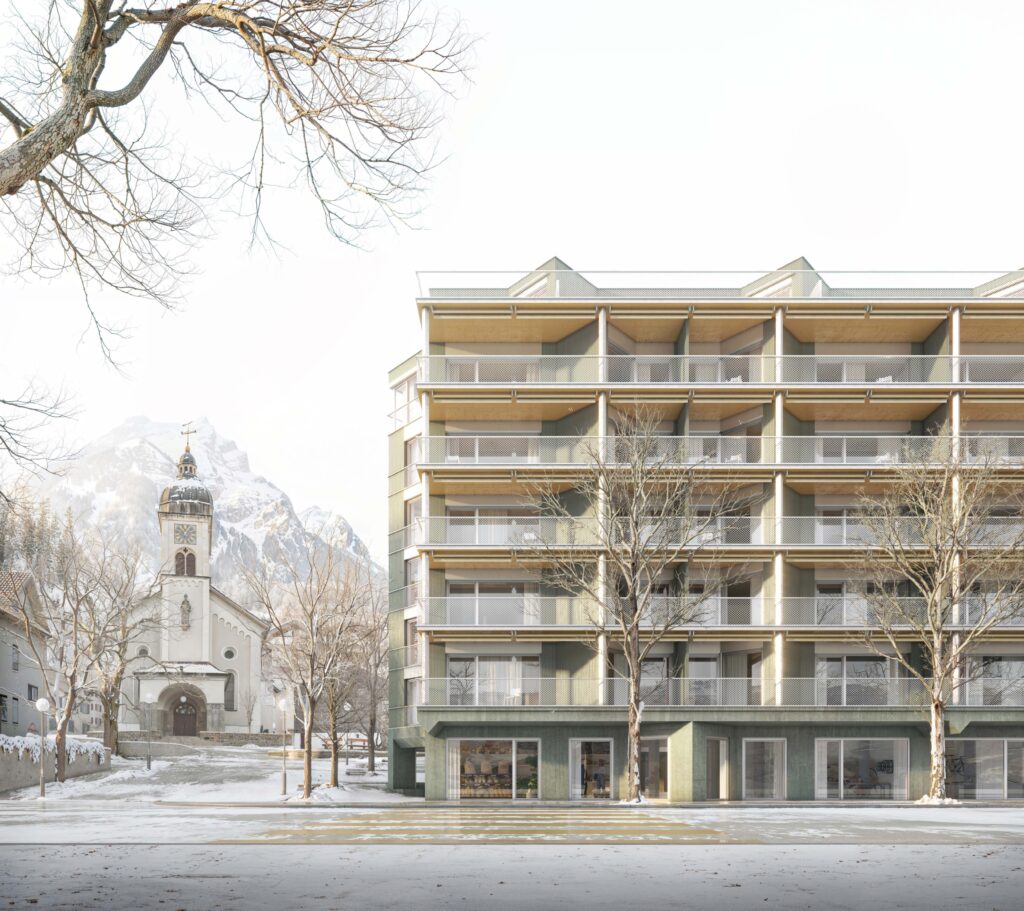
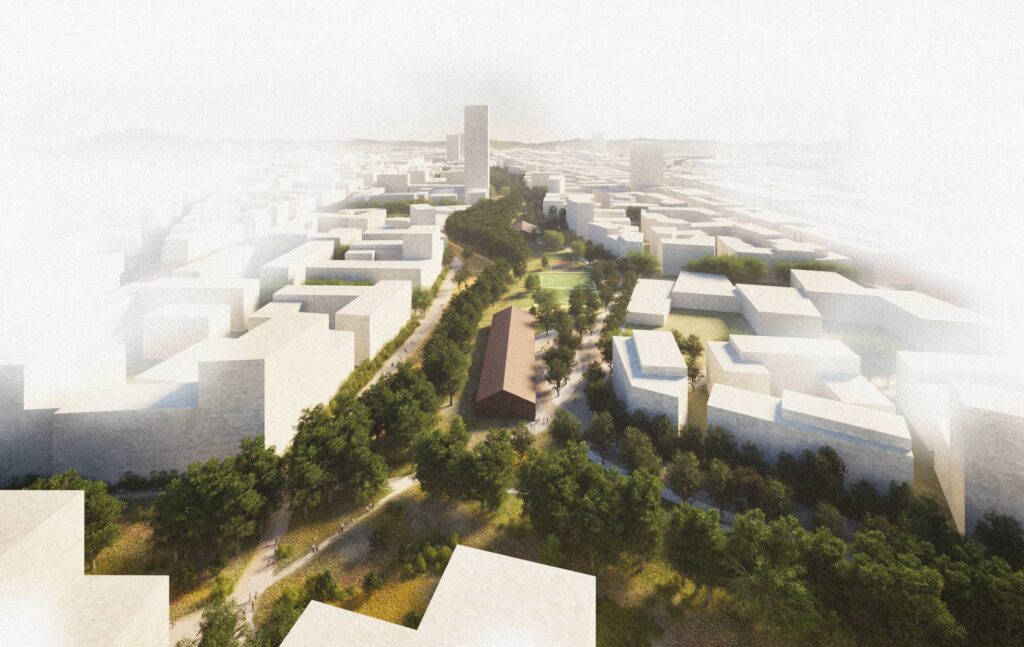
In recent decades, however, urban growth has compromised the coherence and legibility of the town’s fabric. To address these challenges, the Integrated Urban Development Plan (ISEK) was developed in 2020, aiming through a series of interventions to strengthen the urban structure and enhance the historic center. In particular, the Market Square and the main streets—Bergstraße and Lange Straße—are identified as key elements for intervention.
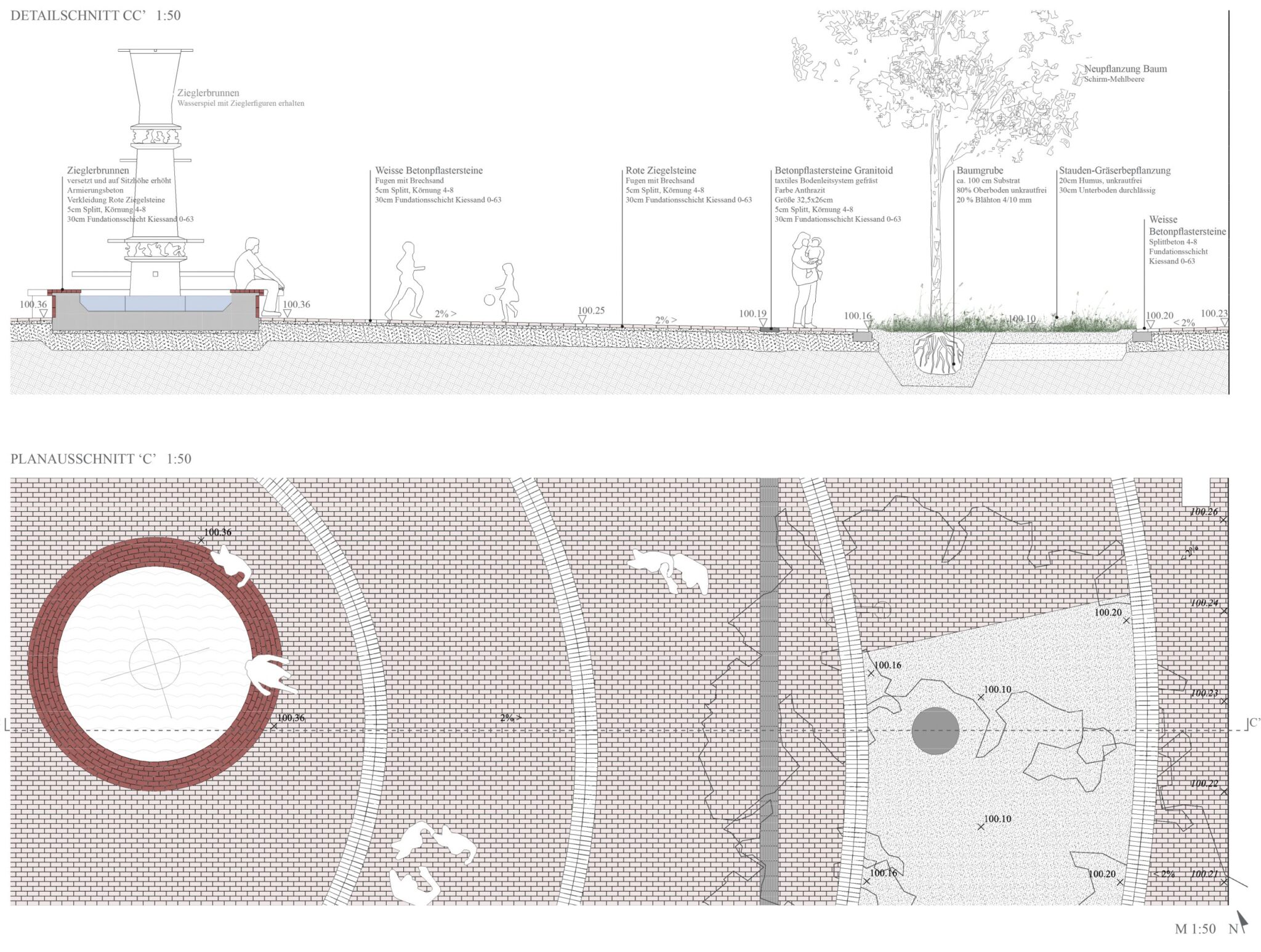
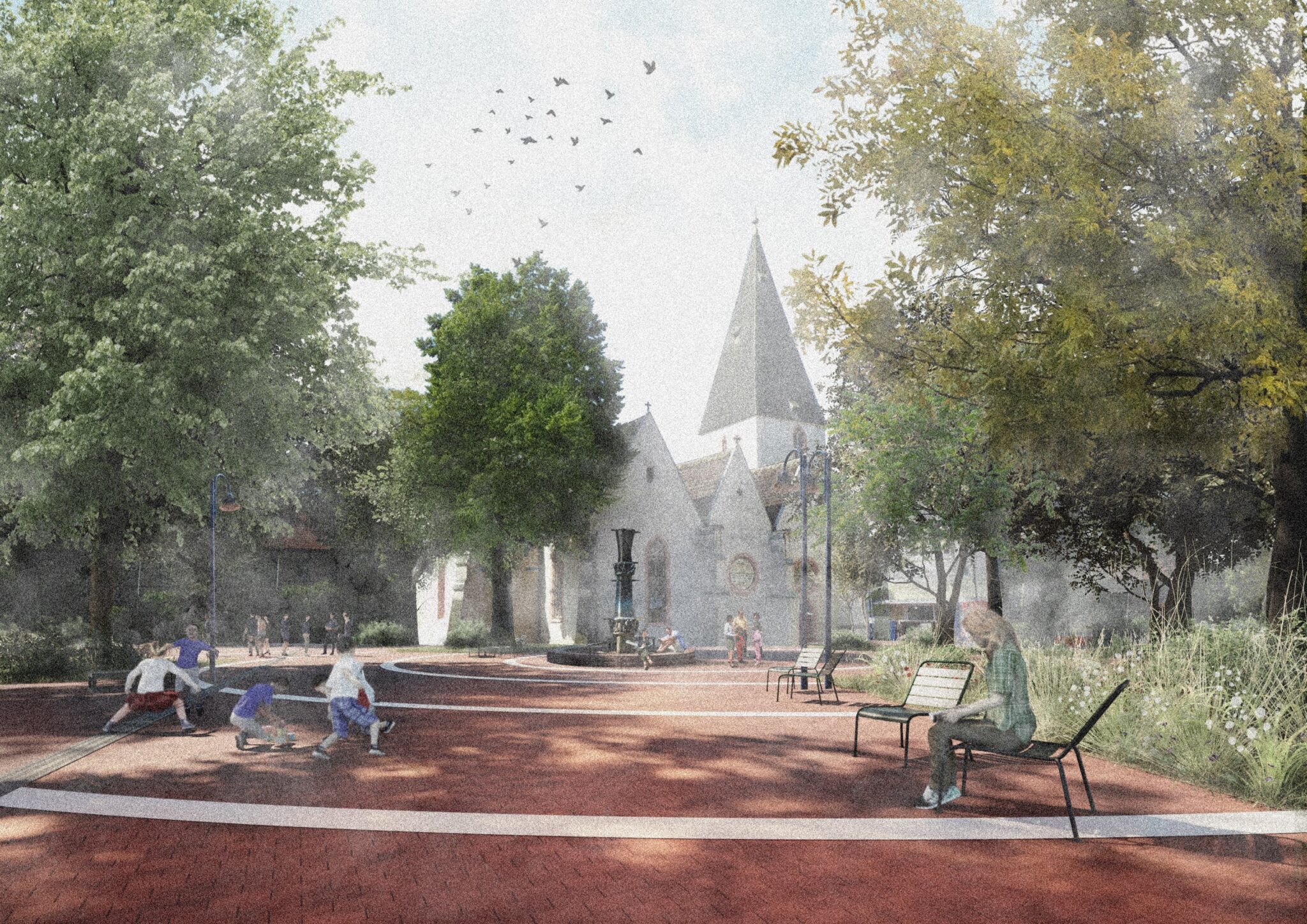
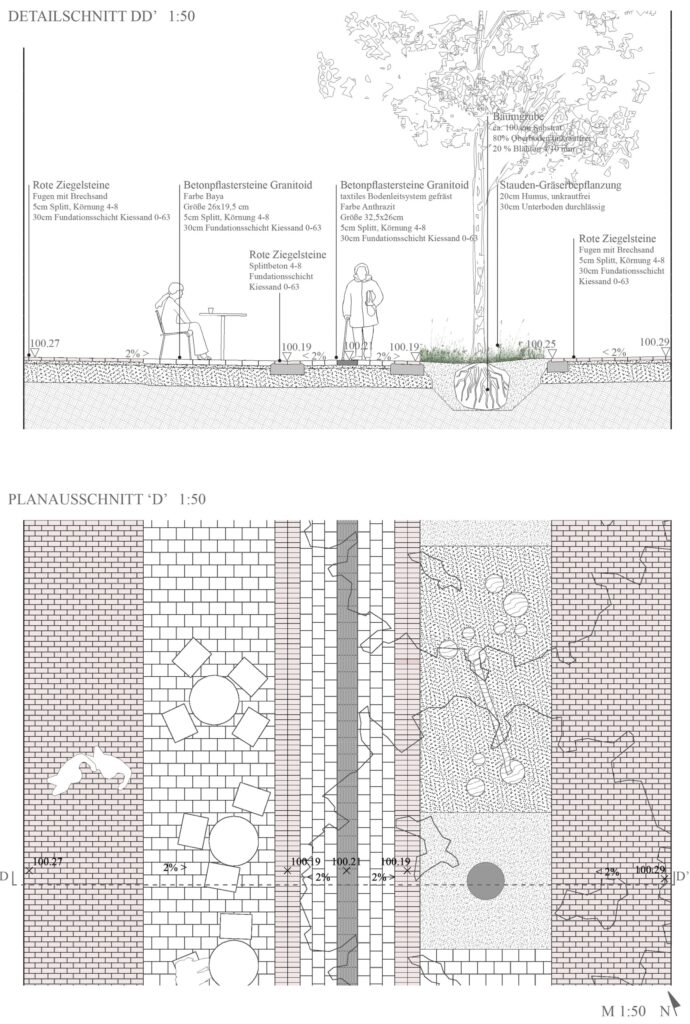
The regeneration project seeks to create a high-quality urban space that brings together historical memory and contemporary needs. The design strategy is based on a reinterpretation of traditional materials: brick is used to emphasize the connection to history, while concrete represents modernity and acts as a unifying element. Lighting design also contributes to this continuity, combining updated historical elements with new technological solutions.
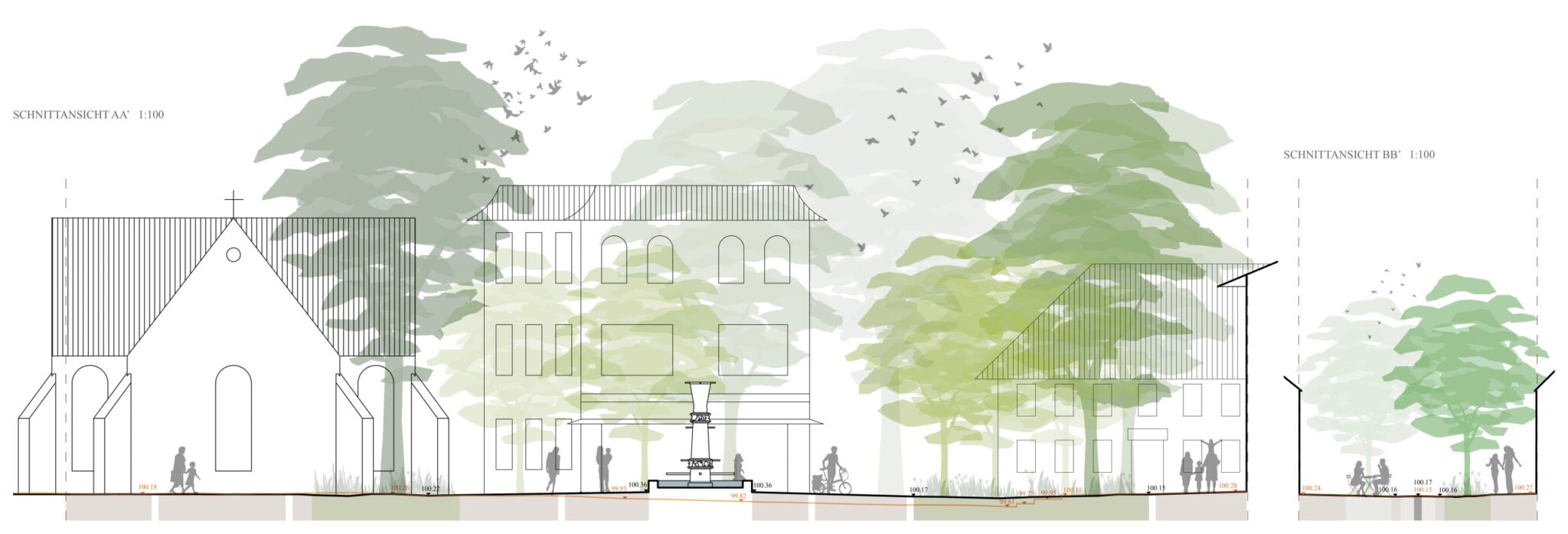
The main streets are redesigned with a clear and functional structure that integrates green spaces, urban furniture, and mobility, while ensuring accessibility and safety. Particular attention is given to stormwater management, through drainage systems integrated into the design. Entrances to the pedestrian zone are enhanced to improve their recognizability, while the Market Square is reinterpreted as the urban core. Here, the brickmakers’ fountain takes on a central role, and the space is made fully accessible through gentle slopes and new contemporary design elements. Green areas, also designed for water collection, contribute to environmental sustainability.
The project also incorporates climate adaptation strategies, such as reducing impermeable surfaces, planting trees, and creating retention basins, thereby improving the urban microclimate.
Finally, the flexibility of public spaces encourages social and cultural use of the historic center, making it a vibrant, inclusive, and dynamic place capable of welcoming both residents and visitors.