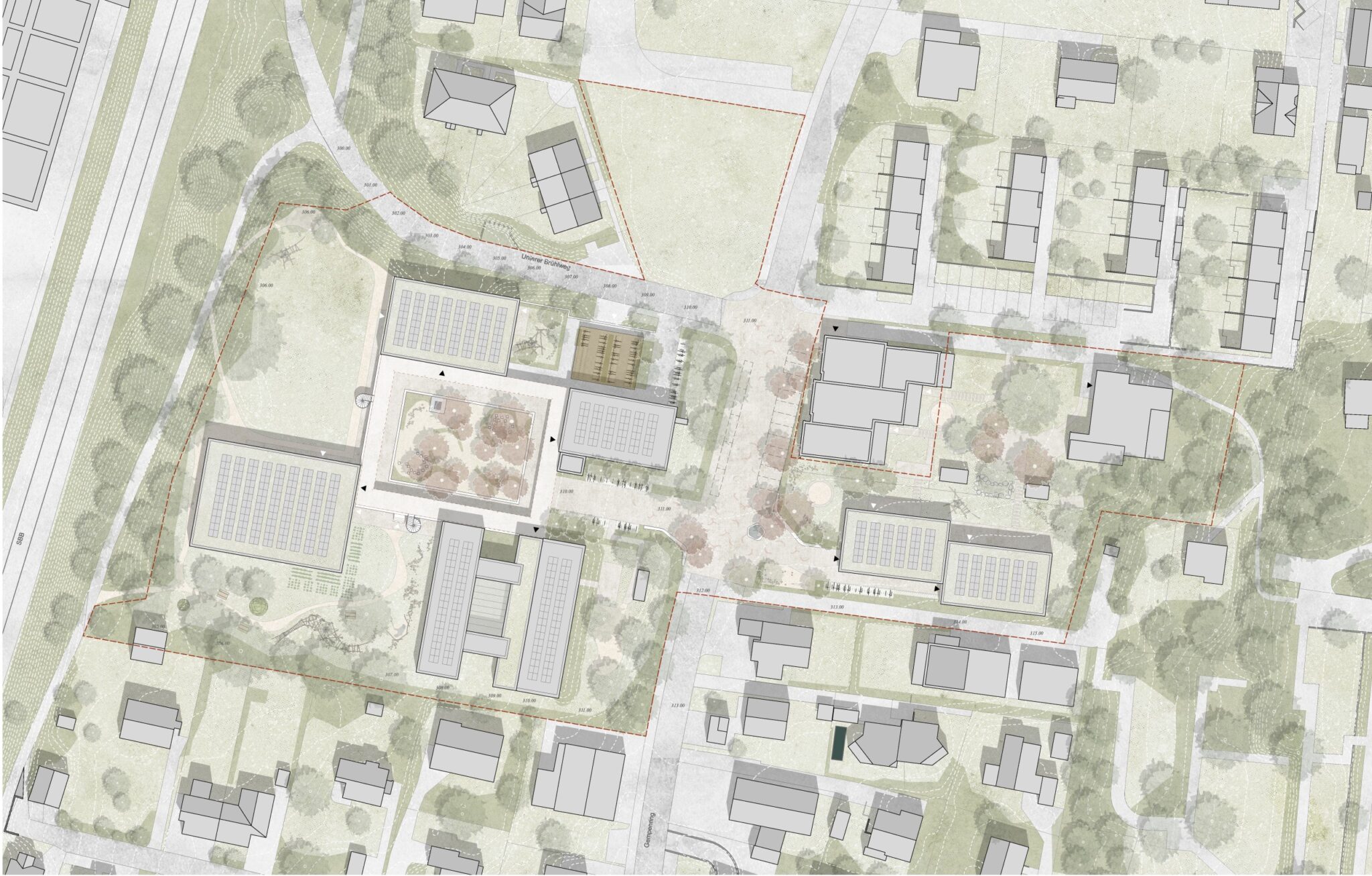
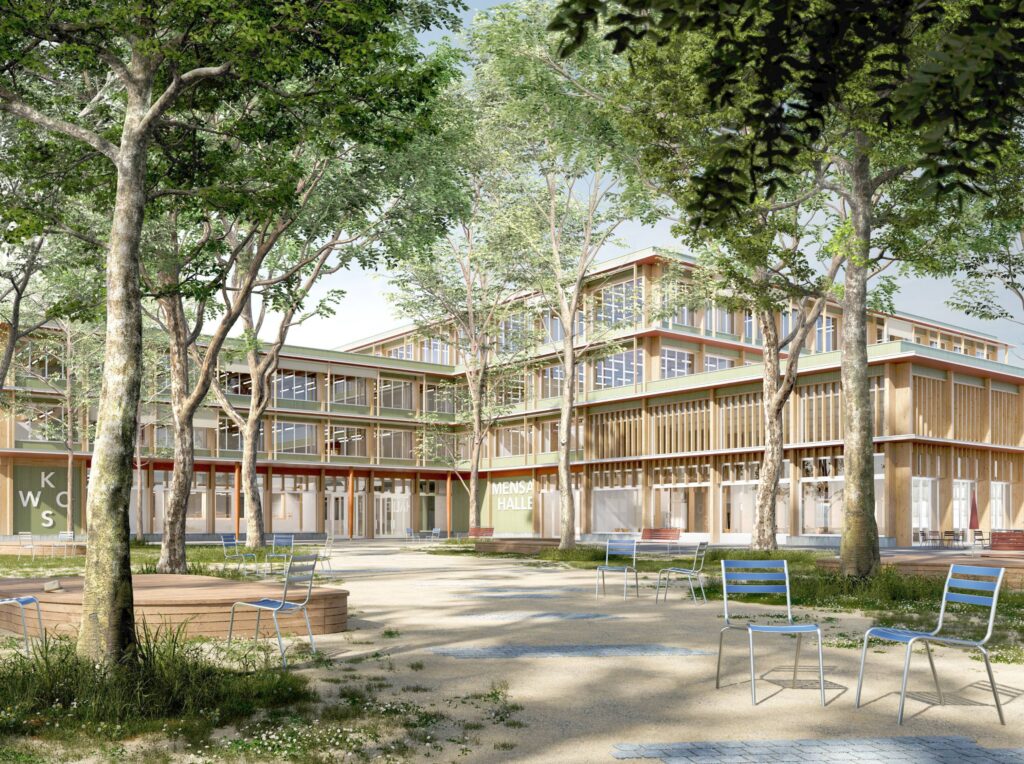
The Brühl School Dornach landscape design project addresses the urban and landscape integration of the primary school and kindergarten campus.
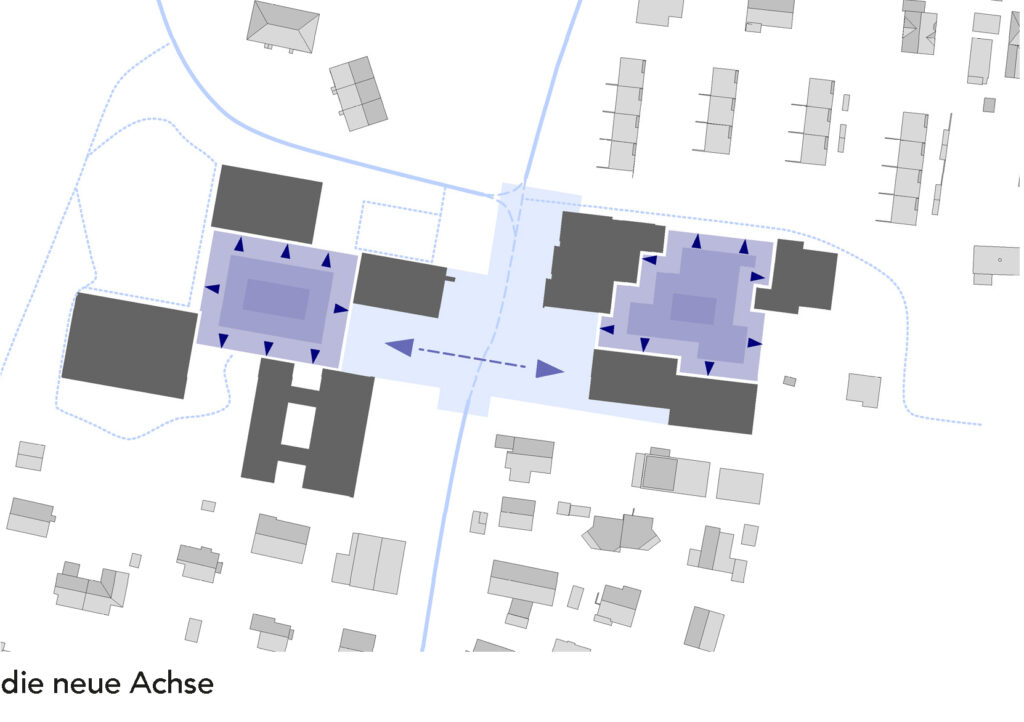
The site of the Brühl primary school and kindergarten in Dornach, Canton of Solothurn, lies within a small and leafy residential neighbourhood. It is located along the axis connecting the river landscape of the Birs with the historic centre of the town.
To the west of the primary school, a dense tree canopy gives the site an intimate atmosphere. At the same time, it acts as an important buffer towards the large-scale infrastructures of the industrial area and the nearby railway tracks.
The careful placement of the new buildings ensures a clear spatial reading of the site. Both the urban structure and the landscape spaces become more legible, while new functions and activities are integrated into the campus.
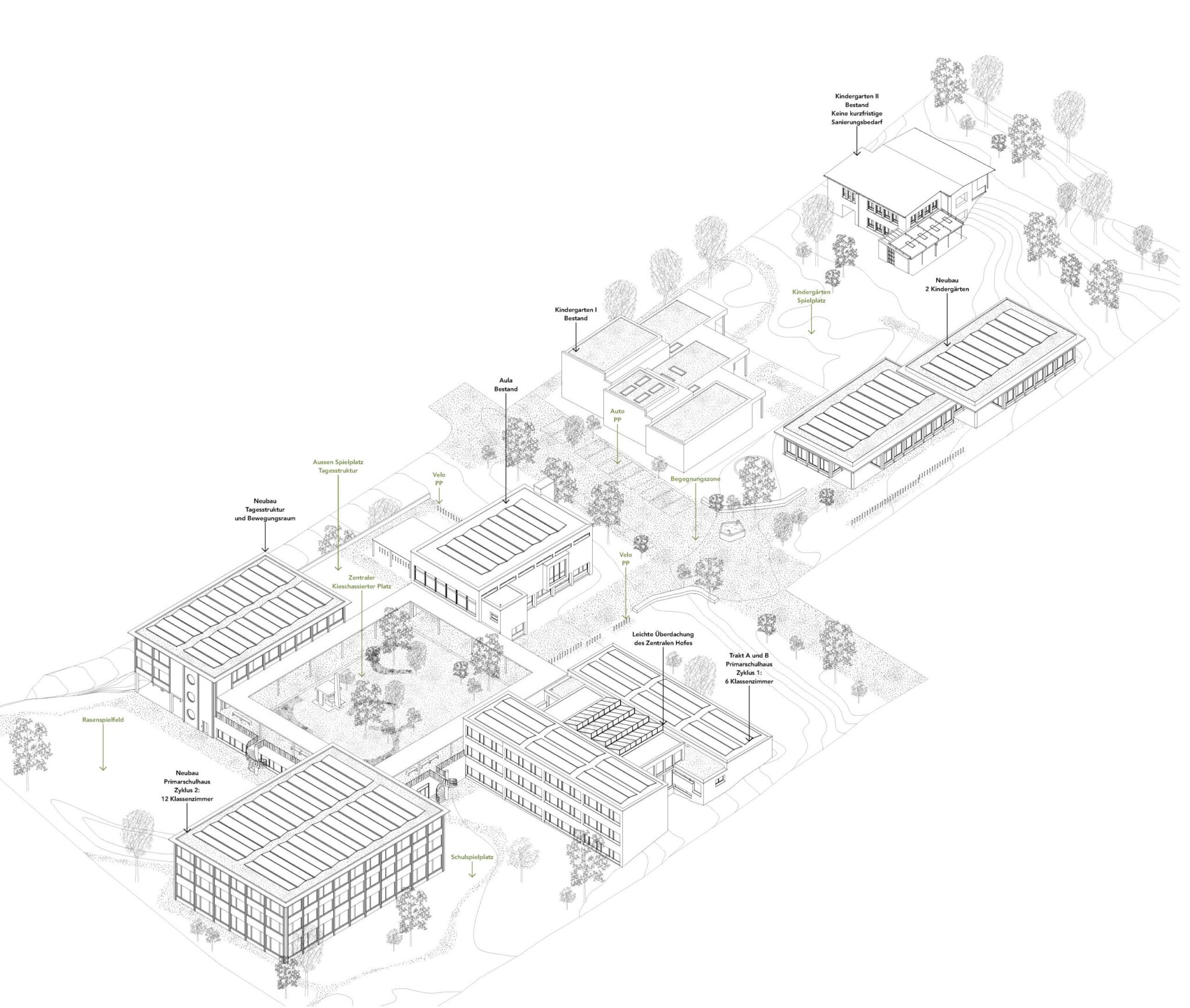
Two clearly defined building volumes, strongly oriented towards the interior, structure the overall ensemble. In the outdoor spaces, they are connected through a coherent landscape design language. Along the main axis, this configuration forms a true urban hinge, bringing together the different parts of the site.
As a result, the urban integration of the new buildings clarifies the existing landscape spaces while simultaneously creating new high-quality places.
Primary School and Day Structure
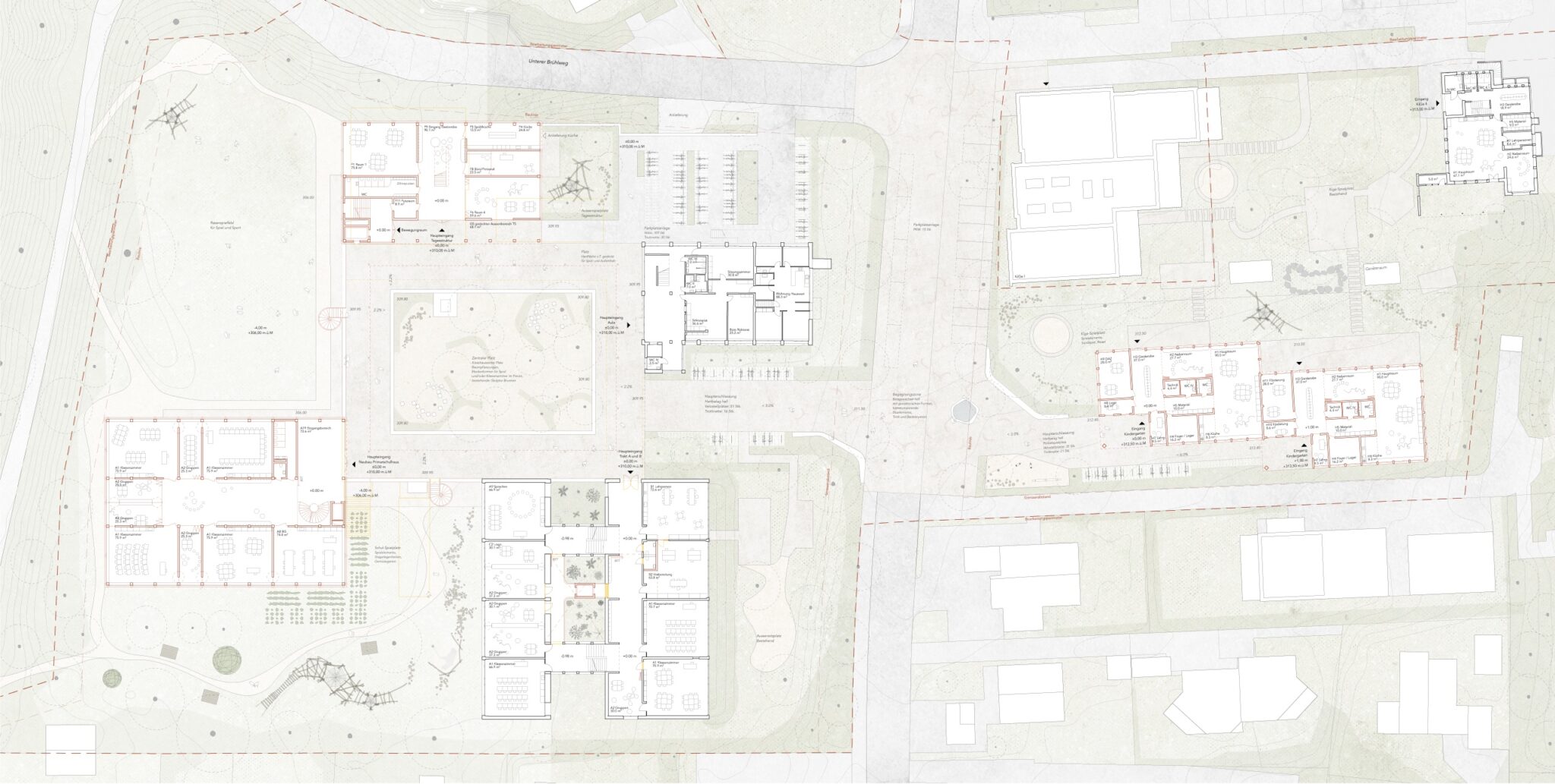
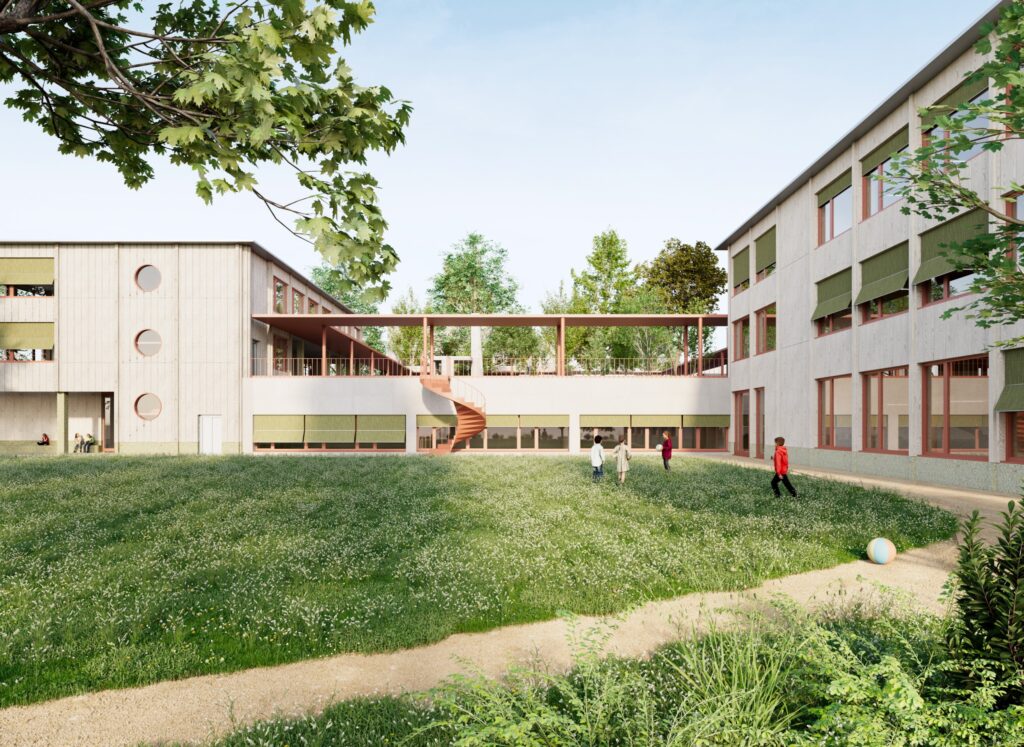
The new buildings for the primary school and the day structure are positioned in a balanced way on the western side of the site. Together with the existing buildings, they reinforce the central square and generate a strong sense of identity for the campus.
The previously sealed surface is transformed into a generous central gravel square. Deciduous trees – which turn red in autumn – and ornamental hedges give the space a distinctive character and create a pleasant environment for play and outdoor teaching.
Two spiral staircases provide functional connections to the lower level.
Play areas, gardening spaces, sports zones and relaxation areas are characterised by a strong natural atmosphere. Meanwhile, gently curved paths connect the different activities and buildings. In this way, the site opens toward its surroundings and becomes integrated into the existing circulation network.
Kindergarten
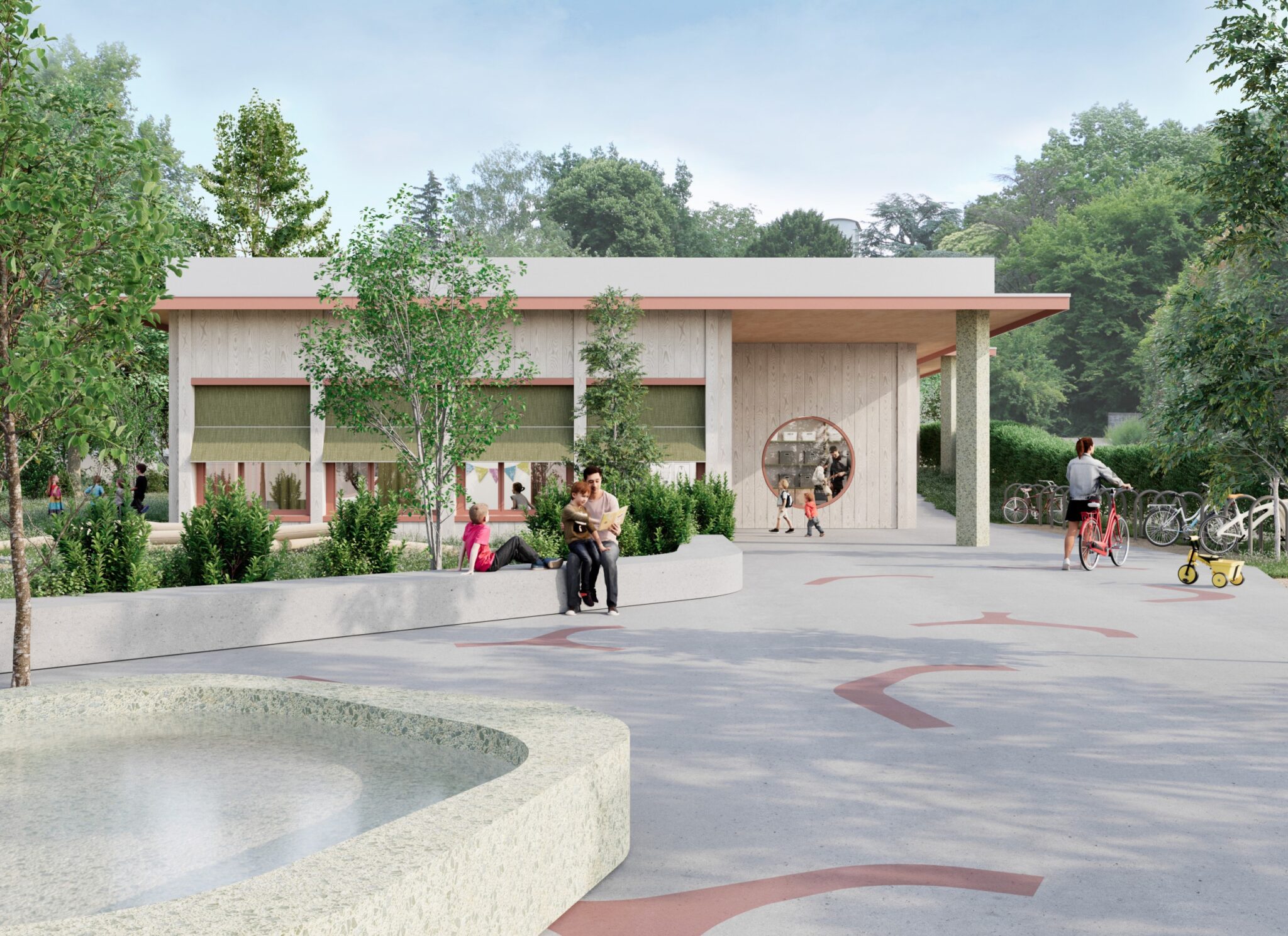
The urban placement of the new kindergarten building to the east creates a more intimate and green centre for younger children.
The new play areas integrate harmoniously with the existing playground. At the same time, they allow a flexible subdivision into group-specific zones depending on the needs of different classes.
Traffic-Calmed Area
Acting as a hinge between the two complexes, this space acquires a square-like atmosphere defined by a clear design gesture.
As a meeting and transition area, it is characterised by a change in paving with artistic details. In addition, two low seating walls create a relaxed and slow-paced environment, while a fountain acts as a distinctive element within the space.
Accessibility
Existing access routes are enhanced and further developed.
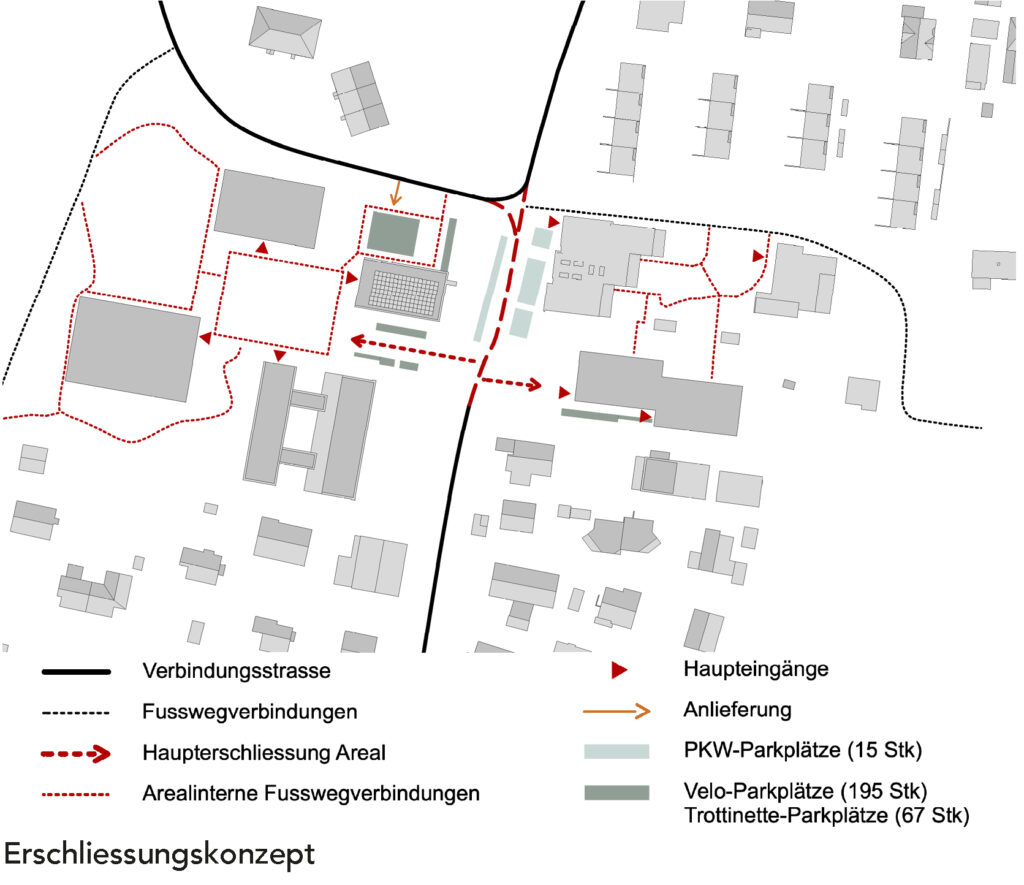
The new square-street functions as the main address of the campus. From here, a primary axis connects the central square of the primary school to the west. Consequently, all four buildings can be accessed easily and clearly.
In contrast, the kindergarten building to the east is reached more directly.
The bicycle parking area to the north is reorganised and equipped with a pergola that provides both shading and spatial definition. Furthermore, additional bicycle and scooter parking is distributed along the main axis between the kindergarten and the primary school.
Car parking is discreetly integrated within the meeting zone.
Nature and Ecology
The existing tree stock within the project area is carefully integrated into the new design wherever possible. In addition, targeted planting strengthens the ecological structure of the site.
Important habitats for flora and fauna are preserved and enhanced. Vegetation also plays a crucial role in regulating the local microclimate.
Particular attention is given to heat-reduction strategies. Seating areas and south-facing façades are shaded, light-coloured natural materials are preferred, and permeable surfaces allow sustainable stormwater management.
Through these strategies, the Brühl School Dornach landscape design project creates a resilient and climate-responsive educational landscape.