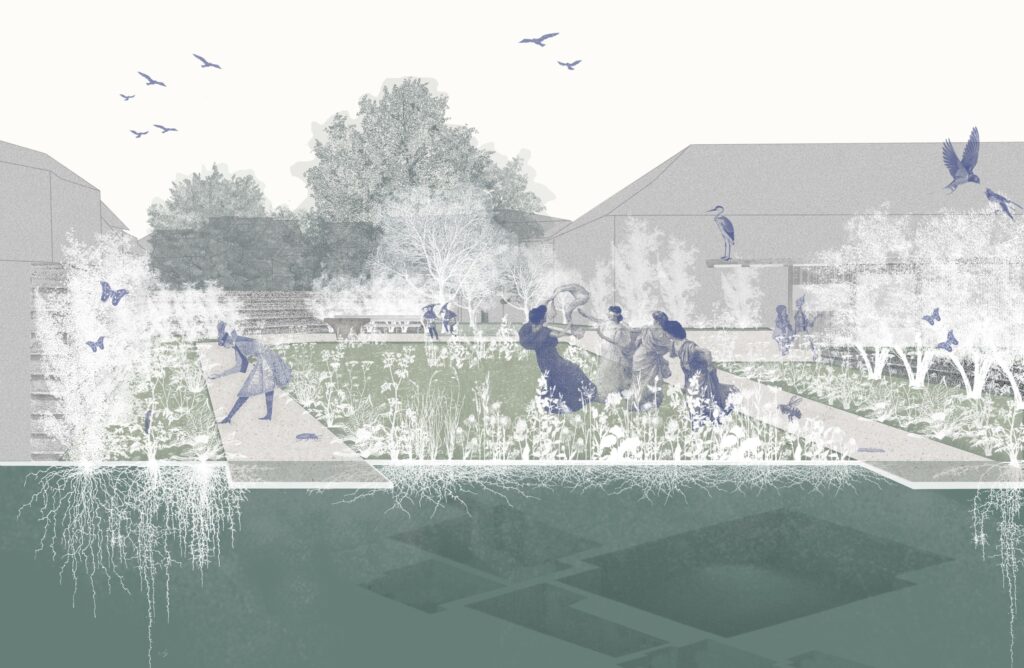
The Nordwestbahnhof Wien landscape masterplan tells a layered and complex story about the area. Originally part of a river system, the site was reshaped by the regulation of the Danube and later transformed into a strategic railway infrastructure hub.
During the Second World War, the station building was used as a propaganda exhibition space, and a forced labor camp was established on the site. After the war, the area continued to function as a freight transport hub until operations definitively ceased in 2021.
Today, the 44-hectare Nordwestbahnhof site represents a unique opportunity for urban transformation. The Nordwestbahnhof Vienna landscape masterplan supports the development of a new, vibrant and climate-responsive district where nature, housing and work are fully integrated.
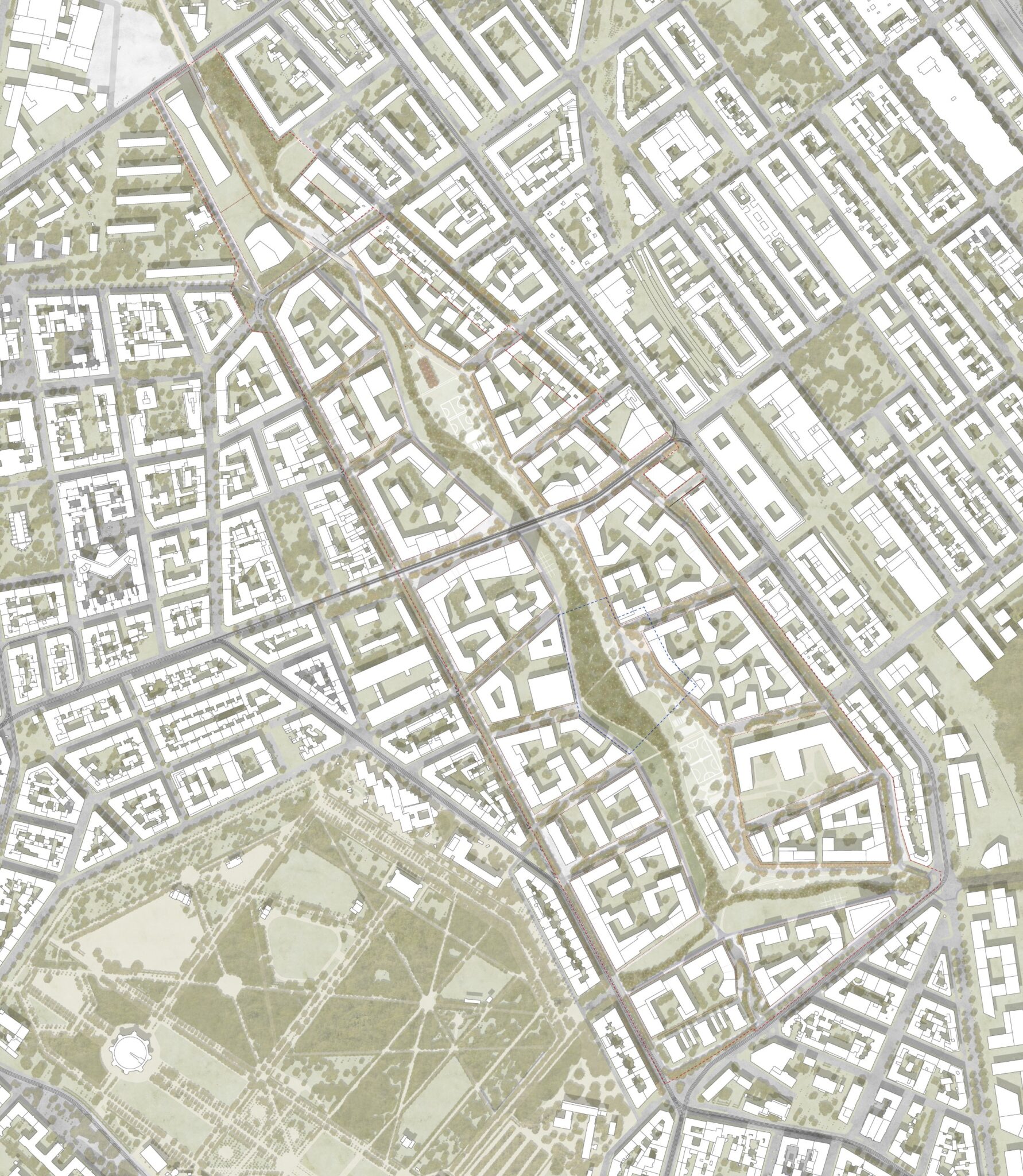
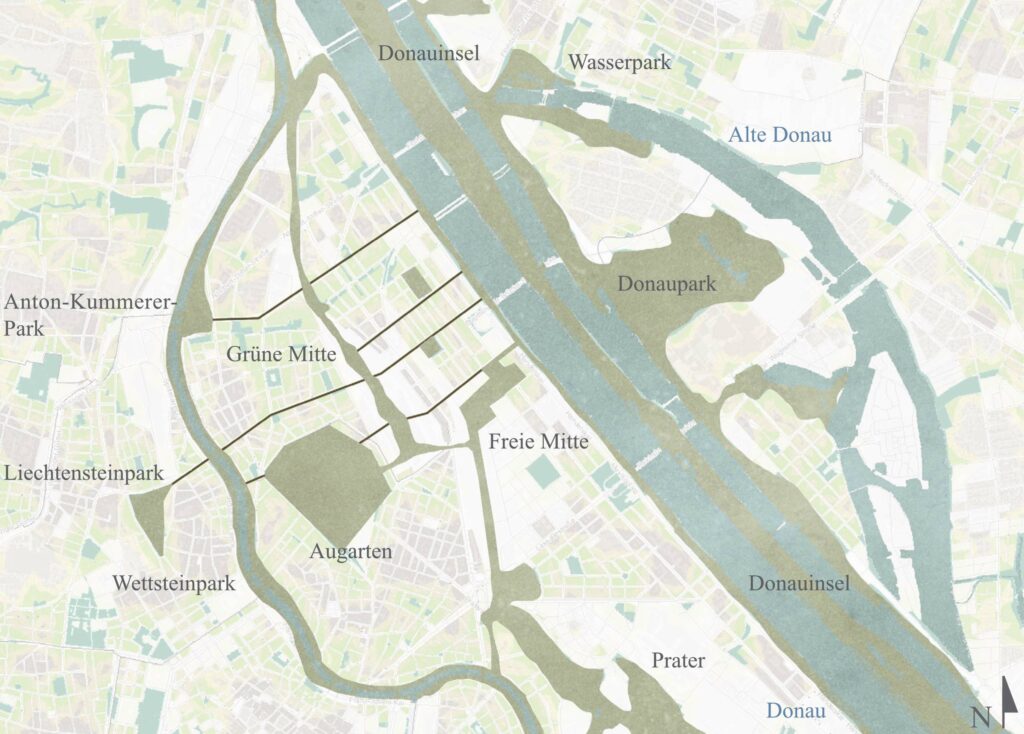
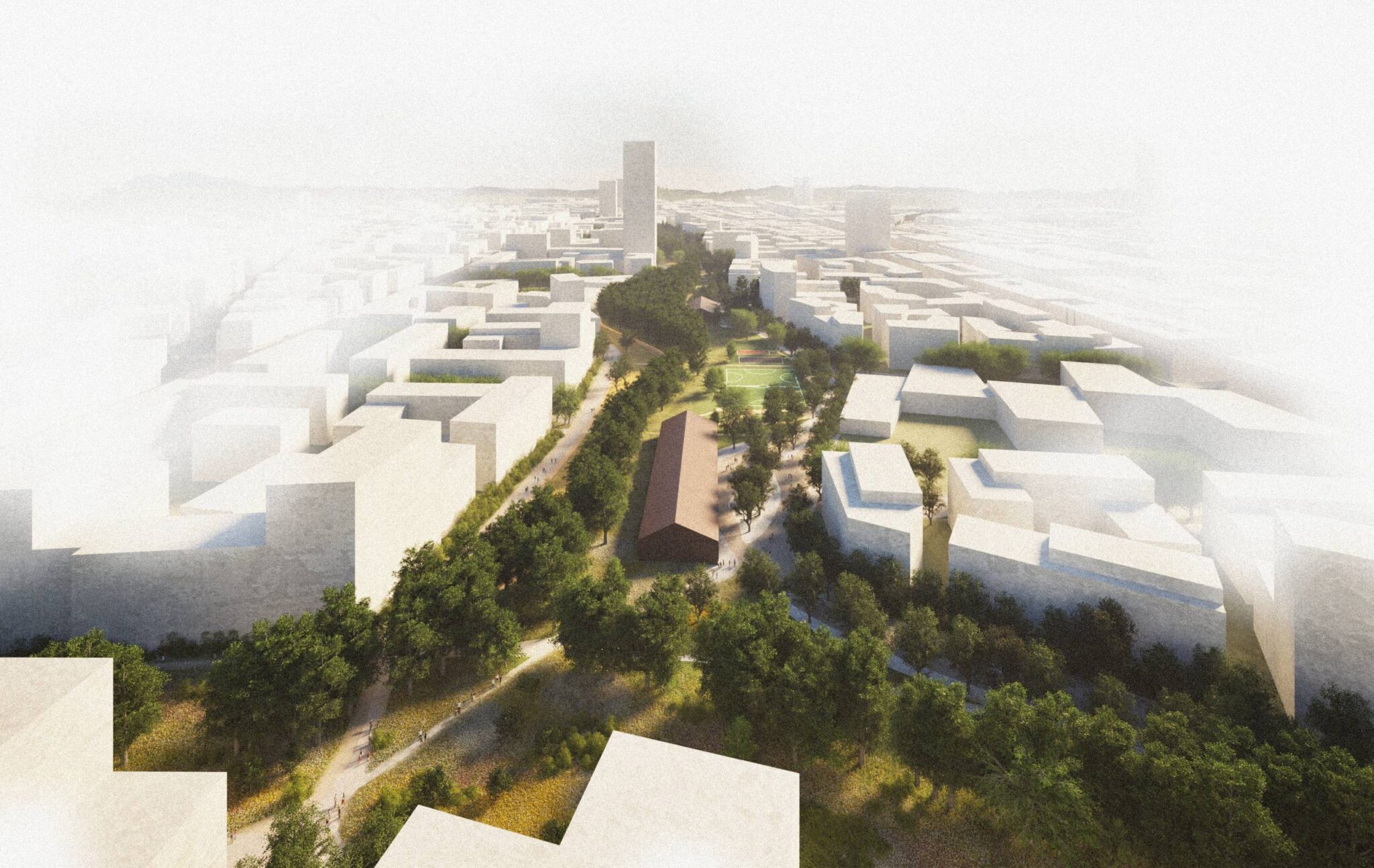
The masterplan establishes strong connections with the surrounding urban and landscape context. It ensures continuity of open spaces, wide visual corridors and the active integration of historical memory within the project framework.Nordwestbahnhof Wien landscape masterplan
Landscape Concept: The Grüne Mitte
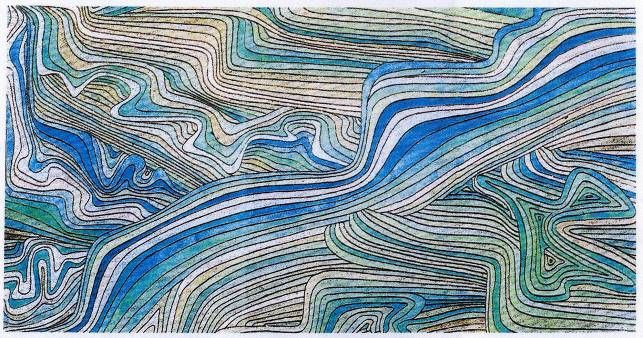
The site’s original river landscape, now lost, becomes the conceptual reference for the project. Nature is reinterpreted as an ordering principle.
The Grüne Mitte (Green Core) is structured through fluid forms and south–north oriented bands, echoing the historical alignment of the railway tracks. This configuration enables clear functional organization while strengthening ecological corridors.
At the same time, the Grüne Mitte acts as an urban hinge. It connects the two sides of the district, ensuring visual transparency and spatial permeability.
Park Structure and Ecological Gradient
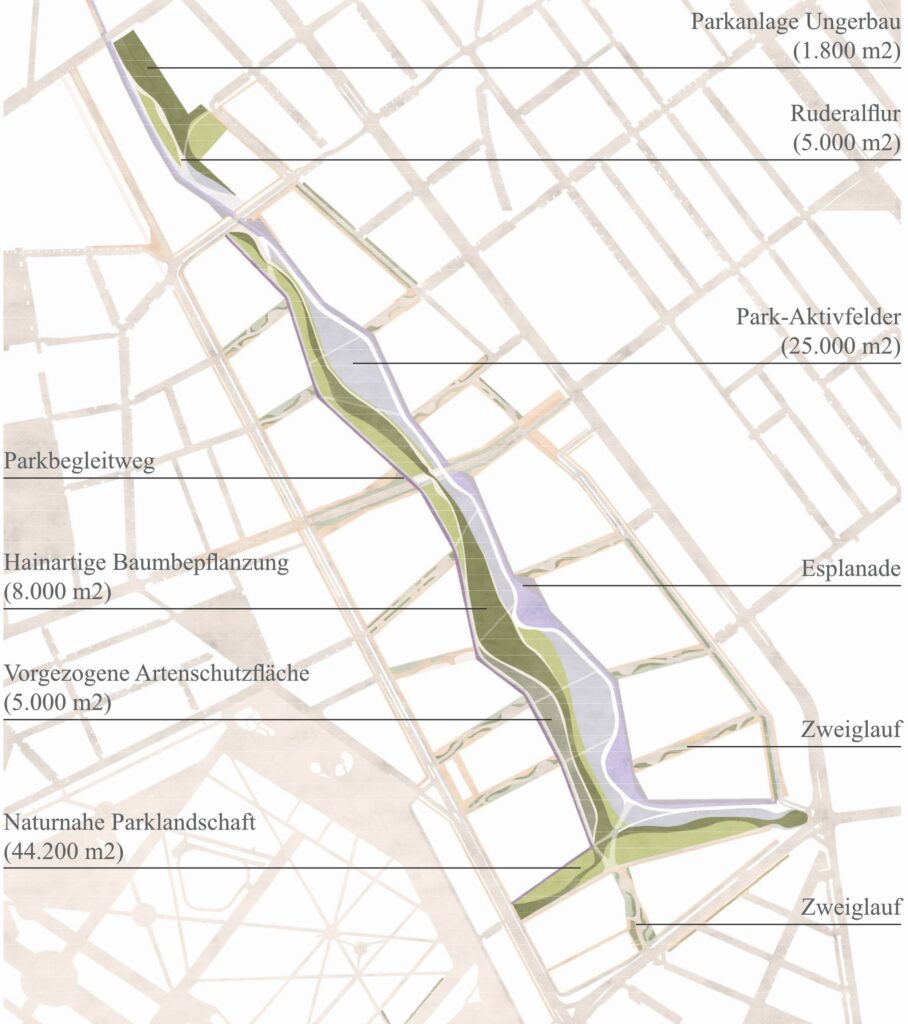
Starting from the Esplanade, characterized by more intensive use, the park gradually transitions westward into quieter and ecologically sensitive areas.
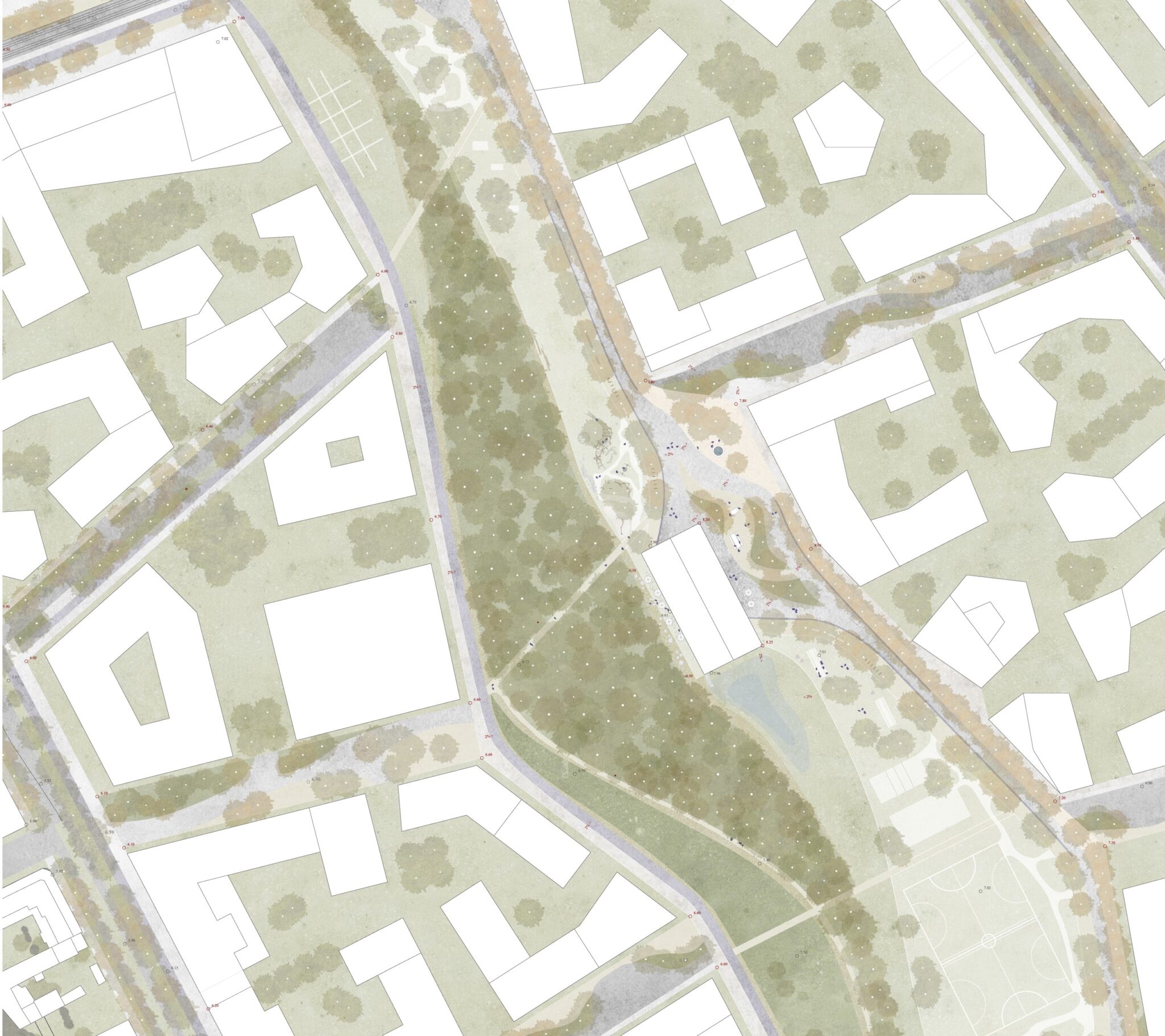
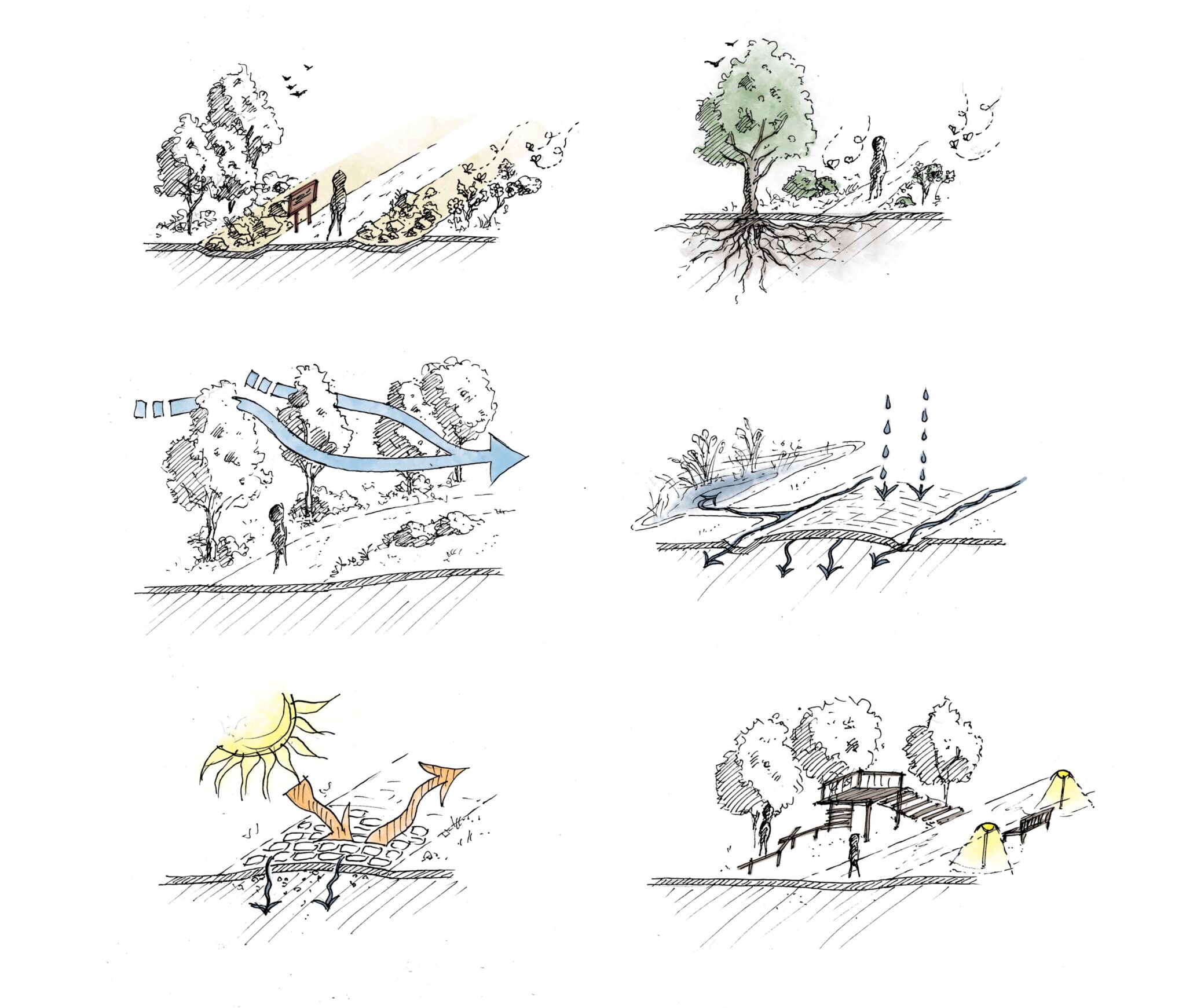
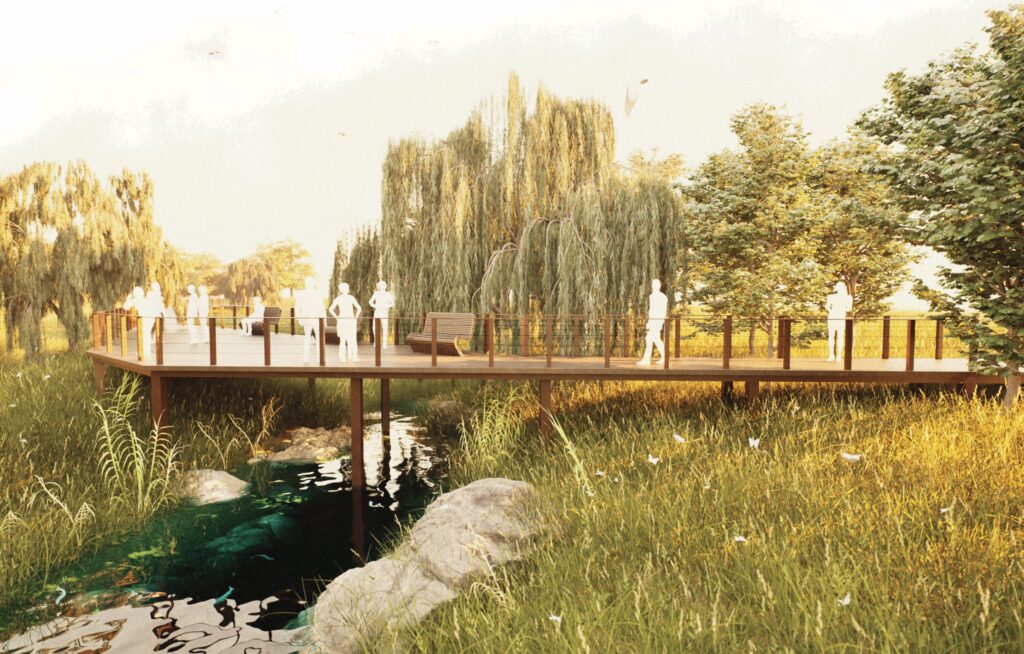
Depressed bands, shaped as shallow basins, host ruderal vegetation and raw stone materials. These elements create diverse habitats and allow coexistence between protected zones and public space.
A central tree-lined strip with tall canopy trees runs across the park. In natural areas, it remains permeable. Within the approximately 8,000 m² protected ecological zone, it becomes denser with layered shrub planting. Its strategic position provides shade to the Park-Aktivband during the hottest hours of the day.
The Park-Aktivband extends over approximately 25,000 m² along the north–south axis. It accommodates playgrounds, community spaces, sports areas, a skatepark, dog areas and flowering meadows, generating an immersive experience in direct contact with nature.
As a symbolic memory of the National Socialist period, the footprint of a demolished building is reinterpreted as a geometric grove of copper beeches. A straight gravel path crosses the space with a silent and contemplative gesture.
The Esplanade: Functional Organization
The Esplanade is structured into three integrated bands.
The Bewegungsband is dedicated to mobility and paved with stone elements suitable for emergency vehicle access.
The Eröffnungsband, exclusively pedestrian, uses permeable paving and engages with ground-floor functions. A rhythmic sequence of climate-resilient trees, including Zelkova serrata ‘Green Vase’ and Gleditsia triacanthos ‘Skyline’, provides shade and thermal comfort.
The Erlebnisband acts as a transition towards the Park-Aktivband. It integrates seating, bicycle parking, lighting and permeable surfaces. Vegetation becomes lighter and introduces native species such as Tilia tomentosa ‘Brabant’.
Ecology, Mobility and Public Space
The Nordwestbahnhof Vienna landscape masterplan avoids rigid user segregation. Instead, it encourages participation and interaction through layered and explorative landscapes.
Maintenance is conceived as an evolving process. Vegetation defines spatial identity and transforms over time.
An educational path connects the school campuses and crosses protected ecological areas. The Einkaufsstraße integrates tram tracks and reinforces the natural south–north axis. Secondary streets adopt the same band-based language, incorporating green surfaces with water retention capacity.
Conclusion
The project delivers a heterogeneous yet coherent urban landscape. Its structure is clear and recognizable, yet flexible enough to adapt over time.
The Nordwestbahnhof outdoor spaces in Vienna promote long-term, climate-responsible planning. Sustainability is not imposed as a formal constraint. It emerges through sensory quality, ecological protection and a conscious approach to public space design.