Masterplan of the extra moenia landscape of the Archaeological Park of Pompeii
Year: 2022
Location: Pompeii, Naples
Customer: Archaeological Park of Pompeii
Status: Detailed Project
Surface: 17 ha
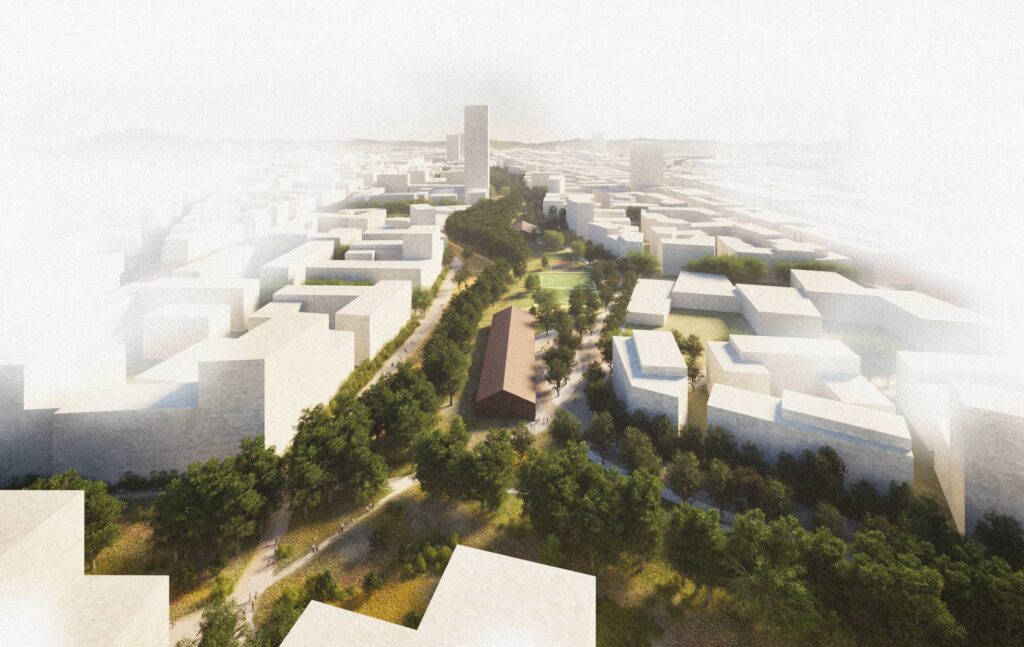
Aerial view of the Vesuvius territory and of its settlements
The archaeological site of Pompeii is located between the sea and the volcano and is the focal point of the transport network and green infrastructure
The project is located within the perimeter of the archaeological site of Pompeii, located in the municipality of the same name in the province of Naples. Specifically, the intervention concerns the green belt (about 4 km) which goes from Porta anfiteatro to the Villa of Diomede, also including: the elevated path which overlooks the necropolis of Porta Nocera, the plateau between Via dell’Abbondanza and Via di Nola (Regio III and IX), a part of the agricultural area located outside the ancient city walls, between Porta Vesuvio and Porta Ercolano, a portion of the Insula Occidentalis, the green area of the gully outside the walls of Porta Stabia and finally the one adjacent to the Quadriportico.
Focusing on the singularity and excellence of the site, the overall redevelopment of the green belt aims to preserve the natural spirit of the place and emphasize as much as possible the architectural, landscaping and visual elements, so as to enhance the existing while preserving the historical memory. The landscape project introduces new plants and furnishings, together with the recovery of the current routes and the insertion of new connections, which will therefore contribute to guaranteeing a better usability of the area.
Concept
Respecting the immense historical and scenic value of the site, both in material and symbolic terms, required a careful analysis of the location and its history, including its more recent past. An interesting idea was provided by the work of Annamaria Ciarallo (a scholar and official of the Ministry of Culture), who in the late 1990s introduced groves, rows of stone pine, furnishings, and tuff pathways in the extramural area. In the proposed masterplan, tuff also reappears as a symbolic and distinctive element of the extramural area, through inserts in the paving and as the base for the seating designed for the site.
The project addresses all the deficiencies in terms of furnishings and functional areas that currently characterize the site. Rest areas, picnic spots, outdoor fitness zones, playgrounds, bars, birdwatching areas, and more have been added. The chosen material for most of the furnishings is FSC (Forest Stewardship Council) wood or other materials that blend well with the site. Some furnishings, such as the bench and the birdwatching station, have been specifically designed for the location.
The project addresses all the deficiencies in terms of furnishings and functional areas that currently characterize the site. Rest areas, picnic spots, outdoor fitness zones, playgrounds, bars, birdwatching areas, and more have been added. The chosen material for most of the furnishings is FSC (Forest Stewardship Council) wood or other materials that blend well with the site. Some furnishings, such as the bench and the birdwatching station, have been specifically designed for the location.
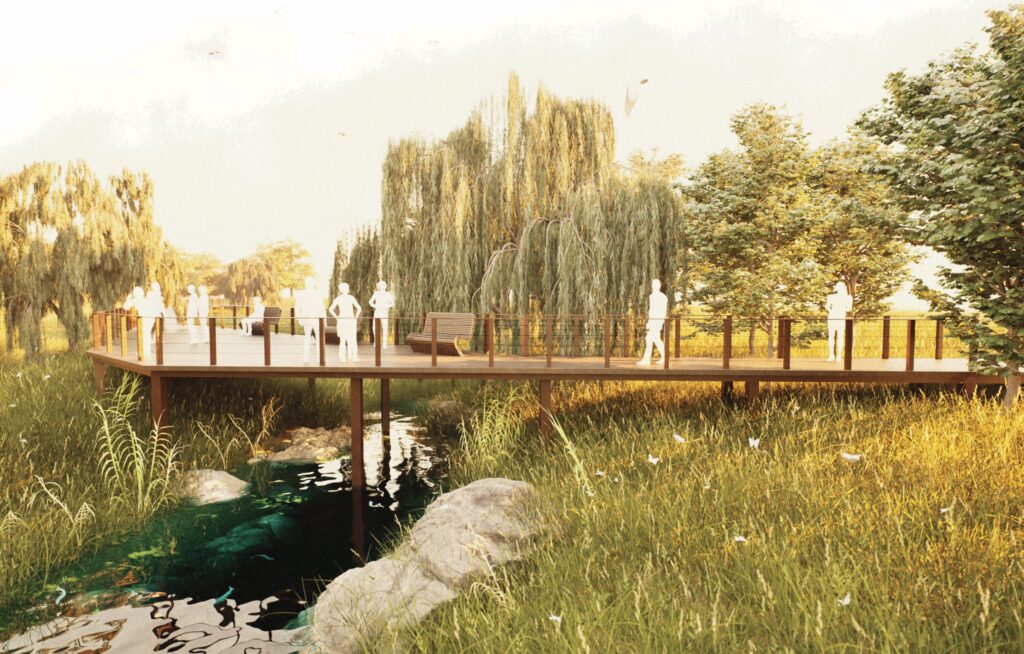
The birdwatching structure is conceived with modular wooden structures with a bamboo cladding. The stations are inclusive, with wider openings, framing views of the excavations, and narrower ones for observing local bird life.
The Pompeii tour is very engaging and strenuous, so it's necessary to have rest and playing spaces. The benches were designed with old and new materials: wood slats, a tuff base and a COR-TEN steel structure.
To achieve the goal of making the entire extramural circuit accessible and meeting the needs of all types of users, a Plan for the Elimination of Architectural Barriers has been developed. The implemented measures include: resurfacing of pathways, providing golf carts and electric scooters with attendants, installing Braille panels, audiovisual totems, tactile paving, and inclusive furnishings, creating quiet points (where individuals with autism spectrum disorders experiencing sensory overload can “recharge”), and installing movable panels using symbols from the Alternative and Augmentative Communication system (ARASAAC).